
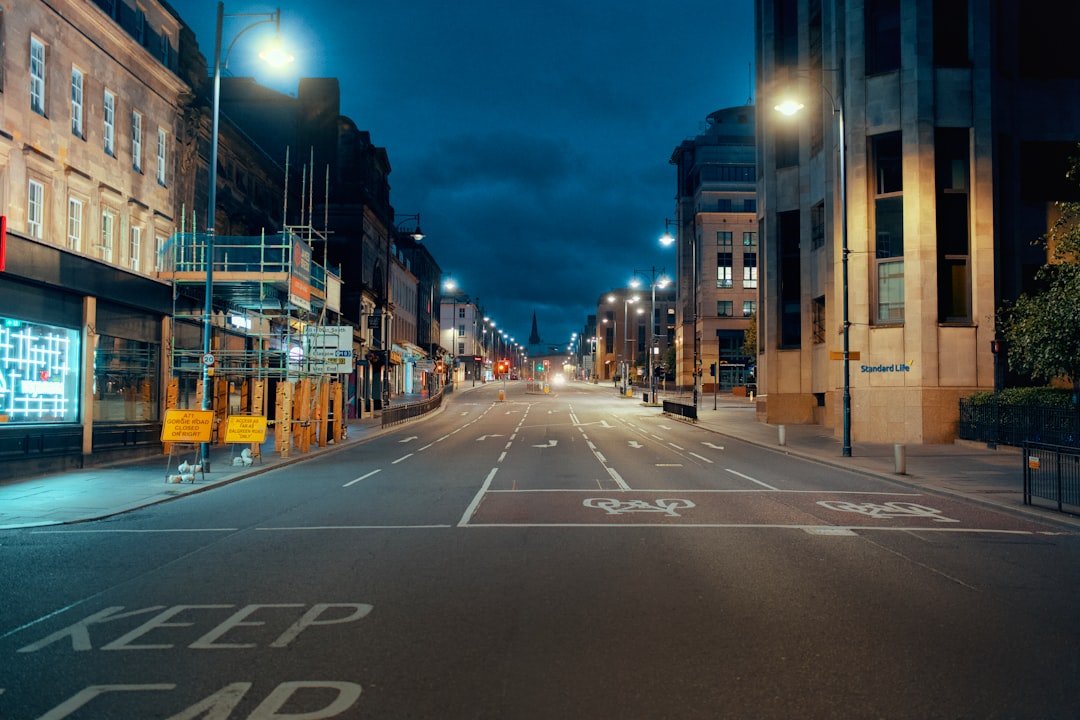
The Kerb Is Becoming the Most Contested Space in the City
A delivery van stops beside a cycle lane. A taxi waits outside a hotel. A restaurant places tables along the street, while residents search for somewhere to park. A bus approaches the same stretch of road and needs clear access to the stop.
Each activity may appear reasonable on its own. Together, they create one of the most persistent management problems in modern cities.
The kerb once performed a relatively simple function. Municipal authorities mainly divided it into parking spaces, loading areas, taxi ranks and bus stops. That arrangement reflected an urban transport system dominated by private cars and fixed timetables.
Cities now expect the same narrow strip of public space to support online deliveries, ride-hailing, shared vehicles, cycle lanes, outdoor dining, waste collection, electric-vehicle charging and accessible passenger transport. These uses change throughout the day, but the rules governing them often remain fixed.
A loading bay reserved for deliveries may stand empty for hours. A parking space may occupy valuable frontage throughout the day even when nearby businesses need short, reliable access for suppliers. Drivers circle the neighbourhood searching for somewhere to stop, while vans unload in traffic lanes because the designated bays are occupied.
The physical street has not expanded. Demand for access to it has.
Parking Is No Longer the Default Use
Cities have traditionally treated kerbside parking as a permanent use and other activities as exceptions. Municipal authorities marked individual spaces, installed signs and applied a set of rules that remained largely unchanged from morning to evening.
That model no longer reflects how urban streets operate.
A single location may serve commuters early in the morning, delivery vehicles during business hours, restaurant guests in the evening and residents overnight. Reserving it for one purpose throughout the day can waste scarce public space and push necessary activity elsewhere.
The change does not mean that cities must remove all parking. It means they must stop treating parking as the automatic first claim on the kerb.
Public authorities increasingly need to compare several possible uses. A parking space may generate a fee from one vehicle over several hours. A short-stay loading zone may serve dozens of deliveries during the same period. A bus boarding area can support hundreds of passengers. An accessible bay may provide essential mobility for people who cannot use another location.
The relevant question is therefore not simply how many parking spaces a street should retain. City managers must decide which use creates the greatest public value at a particular place and time.
Deliveries Have Changed the Calculation
Urban freight has turned the kerb into a critical part of the logistics network.
Retailers, restaurants, offices and residents depend on frequent deliveries, but many streets were designed when goods arrived less often and in larger consignments. E-commerce has increased the number of individual stops, while consumers and businesses expect increasingly narrow delivery windows.
The final metres of a journey often cause the greatest difficulty. A driver may reach the correct street quickly but then spend several minutes searching for legal access. When no loading space is available, the vehicle may stop in a traffic lane, mount the pavement or block part of a cycle route.
The delay affects more than the delivery company. It can slow buses, obstruct pedestrians and create dangerous conflicts with cyclists. Repeated across thousands of daily journeys, poor kerb access becomes a congestion and safety problem for the whole city.
Adding more conventional loading bays offers only a partial answer. Demand varies by street, season and time of day. A permanent bay may remain underused in one location while another street experiences continuous illegal stopping.
Cities need a more responsive system.
The Kerb Is Becoming Bookable
Dynamic kerb management allows cities to change the permitted use of a space according to demand.
A section of kerb might operate as a commercial loading area during the morning, a short-stay passenger drop-off zone in the afternoon and resident parking overnight. Digital signs, road markings, permits and enforcement systems can communicate the current rule.
Some systems also allow delivery operators to reserve a loading space before a vehicle arrives. The driver receives a defined time window and location instead of circling the area or stopping wherever space becomes available.
This approach can make delivery schedules more predictable and reduce the time vehicles spend occupying streets unnecessarily. It also gives the city a clearer view of when and where demand occurs.
The technology is not particularly radical. Booking platforms, cameras, vehicle identification and occupancy sensors already support similar processes elsewhere. The more significant change concerns governance: the municipality begins to manage the kerb as an operating system rather than a row of static spaces.
Data can show how often a bay is used, how long vehicles remain there and when demand exceeds capacity. Authorities can then adjust operating hours, prices or permitted uses instead of relying on occasional surveys and complaints.
Price Can Influence Behaviour
Once cities understand kerbside demand, they can use pricing to improve how the space operates.
A delivery company that needs guaranteed access during a busy period may pay more for a reservation. A vehicle that remains beyond its allocated time may face a higher charge. Lower prices during quieter hours can encourage businesses to shift flexible deliveries away from the busiest periods.
The objective should not be to maximise revenue from every metre of street. Pricing should help align demand with available capacity.
Poorly designed charges could favour large logistics companies that can absorb the cost while disadvantaging small businesses and independent drivers. Cities must therefore distinguish between managing demand and selling public space to the highest bidder.
They may need protected access for essential services, people with disabilities, local traders and organisations that cannot easily change their schedules. Transparent rules will matter as much as the technology used to administer them.
A city that introduces dynamic pricing without explaining its priorities may create the impression that residents and businesses must now pay for access they previously considered public. A city that defines clear service and policy goals can present pricing as one tool within a wider transport strategy.
Better Data Does Not Set the Priorities
Sensors can reveal that a loading bay remains occupied for most of the day. Cameras can identify illegal stopping. A digital platform can calculate how many vehicles requested access at a particular time.
None of these systems can decide whose journey matters most.
Kerb management inevitably involves political choices. Residents may want parking near their homes. Retailers may want continuous customer access. Logistics companies want predictable loading space, while transport authorities need unobstructed bus routes and safe cycle infrastructure.
The data can expose the trade-offs, but elected leaders and public officials must still resolve them.
Cities should therefore avoid presenting dynamic kerb management as a neutral optimisation exercise. An algorithm may allocate space efficiently according to the objective it receives, but the city determines that objective.
A system designed to maximise vehicle turnover may produce a different street from one designed to reduce emissions, improve accessibility or support local commerce. The software can execute a policy; it cannot establish the public interest behind it.
Enforcement Must Keep Pace
A bookable loading bay has limited value when another vehicle occupies it at the agreed time.
Cities that introduce more flexible kerb rules also need enforcement capable of recognising those rules. Traditional signs may struggle to communicate several uses across different hours, while officers cannot continuously monitor every street.
Digital permits, licence-plate recognition and occupancy detection can help authorities identify unauthorised use. Delivery drivers may receive confirmation that a reserved bay is clear before they arrive. Enforcement teams can focus on locations where violations cause the greatest disruption.
However, automated enforcement introduces its own requirements. Cities need accurate records, clear appeal procedures and strict rules governing how long they retain vehicle data. They must also account for situations that the system may misinterpret, including emergency stops, mobility assistance and temporary street works.
An efficient kerb cannot come at the expense of due process or privacy.
Cities Need Control of the System
Dynamic kerb management will attract technology companies offering booking platforms, sensors, payment services and analytics. Municipalities should evaluate these systems as long-term public infrastructure, not as isolated software purchases.
The city must retain access to its own operational data. It should be able to change suppliers, connect the system with other transport platforms and revise the rules without paying for extensive proprietary modifications.
Contracts should define data ownership, interoperability, cybersecurity standards and exit arrangements from the start. Otherwise, a city may modernise the kerb while becoming dependent on a supplier that controls the information and technical interfaces required to operate it.
Cities should also avoid building separate systems for parking, deliveries, taxis and charging when those services compete for the same physical space. A common view of the kerb allows authorities to understand the combined demand rather than optimising each activity in isolation.
The Kerb Is Public Infrastructure
The growing competition for kerbside space reflects a broader change in how cities function. More services now arrive on demand, more commercial activity depends on short urban journeys and more people expect streets to support transport, commerce and public life at the same time.
Cities cannot satisfy every claim by assigning more space to each user. They must make the existing space work harder. That requires accurate data, flexible regulation and clearer priorities. It also requires officials to explain why one use takes precedence over another and how those decisions support wider goals for mobility, safety, accessibility and local economic activity.
The kerb may occupy only a narrow part of the street, but it increasingly determines whether the entire street works. Cities that continue to manage it as static parking will allow congestion and conflict to set the rules by default. Those that treat it as adaptable public infrastructure can allocate access deliberately—and change it as urban needs evolve.