
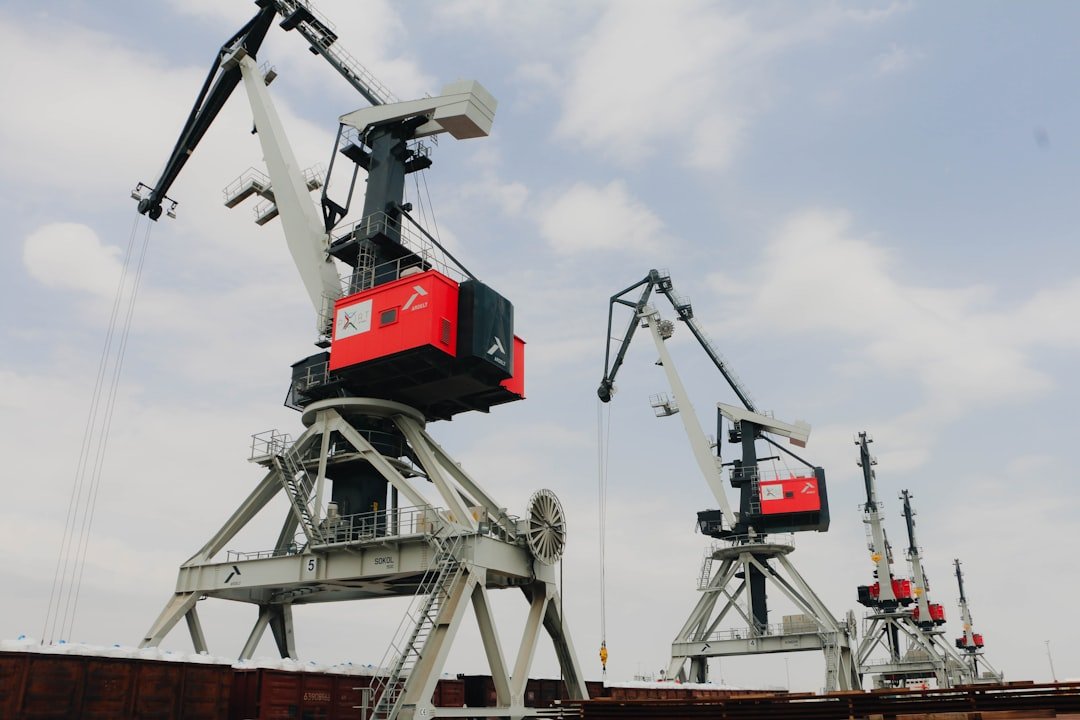
Smart Overhead Cranes Enter a New Growth Phase
An overhead crane is rarely the most visible part of a factory investment. Yet when it stops, production may stop with it.
That operational importance is helping to support steady growth in the market for bridge cranes, gantry systems, hoists and associated services. Allied Market Research estimates that the global overhead cranes market could rise from $5 billion in 2023 to $7.6 billion by 2032, representing annual growth of 4.8 percent. Other market researchers produce somewhat different figures, reflecting variations in product definitions and forecasting methods, but most point towards continued expansion rather than an abrupt industrial boom.
The more interesting development is not the headline valuation. It is the changing nature of the equipment being purchased.
Manufacturers are no longer assessing cranes only by lifting capacity, span and initial price. Sensors, remote monitoring, automated positioning and predictive maintenance are turning lifting equipment into a connected part of the production system. The commercial case increasingly rests on whether a crane can reduce downtime, improve safety and remain productive throughout a long operating life.
From lifting equipment to production infrastructure
Overhead cranes move materials through automotive plants, steel mills, warehouses, power facilities, paper mills, shipyards and other environments where loads are too heavy, hazardous or repetitive for conventional handling equipment.
Their value lies partly in the use of space. Unlike mobile cranes or forklifts, an overhead system can move loads above the factory floor without permanently occupying production routes. This can make it particularly useful in facilities where floor space is constrained or materials must pass through several production stages.
The requirement is not simply to lift more. A crane may need to position a component precisely, operate close to workers, coordinate with machinery or perform the same movement hundreds of times during a shift. An automotive plant handling dies, batteries or vehicle bodies has different requirements from a steel mill moving molten material or a power facility servicing a turbine.
This makes the overhead crane market less uniform than its headline value suggests. Some installations are relatively standard. Others are engineered around a particular building, process and safety environment, with maintenance commitments extending over decades.
That helps explain why service, inspection and modernisation are commercially important alongside the sale of new equipment. Replacing an entire crane may be unnecessary when its controls, drives, hoists or safety systems can be upgraded.
Automation is changing the buying decision
Industrial automation is one of the clearest sources of demand. As factories introduce connected machinery and more tightly controlled material flows, manually operated lifting equipment can become a bottleneck.
A smart crane may use sensors and software to monitor loads, movements, operating hours and component condition. Automated positioning can help move material to a defined location, while anti-sway functions can reduce load movement during travel. Collision-avoidance technology may help prevent contact between cranes, structures or restricted areas.
These features do not turn every crane into an autonomous machine. Many installations will continue to require trained operators, particularly where loads and operating conditions vary. The practical shift is towards selective automation: technology assists with repetitive movements, load control and risk reduction while the operator retains responsibility for the wider task.
Manufacturers are also incorporating remote connectivity and embedded intelligence into their equipment. Konecranes, one of the largest companies in the sector, describes connected equipment, predictive maintenance, digitalisation and automation as central parts of its technology strategy. Its 2025 reporting links real-time connectivity and equipment data with preventive and predictive maintenance services.
The benefit must still be demonstrated at plant level. Additional sensors and software increase complexity, and data is useful only when a company can interpret it and act before a failure occurs.
Downtime gives predictive maintenance its value
A crane is often positioned at a critical point in production. If it becomes unavailable, the resulting cost can exceed the price of the failed component.
Traditional preventive maintenance attempts to manage this risk through inspections and scheduled replacement. Predictive systems add information about how the equipment is actually being used. Operating data may reveal unusual braking behaviour, repeated overloads, excessive starts, abnormal temperatures or components approaching a service threshold.
This can help maintenance teams distinguish between equipment that requires intervention and equipment that can continue operating safely. Repairs may then be scheduled during planned shutdowns rather than after an unexpected failure.
The savings are not automatic. Predictive maintenance requires reliable data, appropriate thresholds and technicians capable of interpreting the results. A poorly configured alert system may produce excessive warnings without improving availability. Older cranes may also need substantial retrofitting before meaningful condition data can be collected.
For buyers, the important question is therefore not whether a crane has an internet connection. It is whether the monitoring system provides information that changes maintenance decisions, reduces unplanned outages or extends the useful life of the equipment.
Safety remains the non-negotiable requirement
Digital features may improve oversight, but they do not replace inspections, maintenance or operator competence.
Overhead cranes operate with suspended loads, moving machinery and components exposed to fatigue and wear. Hooks, wire ropes, brakes, limit switches, control systems and structural elements can all become sources of failure if they are damaged or inadequately maintained.
In the United States, the Occupational Safety and Health Administration requires employers to establish preventive maintenance programmes based on manufacturers’ recommendations. Its overhead and gantry crane standard also covers inspections, testing, rated-load markings and maintenance procedures. Test loads generally may not exceed 125 percent of the rated load unless the manufacturer recommends otherwise.
Requirements differ by jurisdiction and application, but the commercial implication is broadly consistent: compliance is part of the crane’s lifetime cost.
A lower initial purchase price may be less attractive when spare parts are difficult to obtain, inspection support is weak or the system cannot be upgraded as regulations and production requirements change. Buyers increasingly need to assess service coverage, technician availability and documentation alongside the equipment itself.
Automation also creates new safety questions. A system must recognise obstacles reliably, respond predictably when sensors fail and allow operators to intervene. The organisation must establish who is responsible for software updates, alarm responses and changes to automated routines.
Smart equipment can reduce some forms of human error. It can also introduce failure modes that maintenance and safety teams have not previously managed.
Asia-Pacific provides scale, but demand is broader
Asia-Pacific is frequently identified as the largest regional market for overhead cranes, supported by its manufacturing base, infrastructure investment and industrial expansion. Grand View Research estimated that the region accounted for 36.4 percent of global market revenue in 2023, while other forecasts also identify Asia-Pacific as the leading market.
China and India remain important sources of new industrial capacity, but regional growth should not be reduced to a simple industrialisation narrative. Demand depends on investment cycles in sectors such as automotive manufacturing, metals, energy, logistics and general engineering. A slowdown in one large end market can affect crane orders even while the longer-term requirement for material-handling equipment remains intact.
In mature industrial economies, replacement and modernisation can matter as much as new factory construction. Companies may install updated controls, variable-frequency drives, radio operation, automated functions or monitoring systems on equipment that has already been working for many years.
The market is therefore supported by two different investment patterns. Emerging industrial capacity creates demand for new installations, while established facilities create recurring demand for maintenance, refurbishment and digital upgrades.
Energy efficiency is becoming part of lifecycle cost
Overhead cranes are not generally discussed as major climate technologies, but their energy use still matters in plants operating fleets of lifting equipment over long shifts.
Modern drives can improve motor control and reduce inefficient movement. Regenerative systems may recover energy generated while a load is being lowered or the crane is decelerating. Better positioning can shorten travel cycles, while monitoring can identify operating practices that create unnecessary wear or consumption.
The financial return varies according to crane size, operating frequency and local electricity costs. A feature that creates meaningful savings in a high-duty steel operation may offer little benefit on a crane used only occasionally for maintenance.
Sustainability claims therefore require the same scrutiny as productivity claims. Buyers should ask for expected energy use under their own duty cycle, not only a general statement that the equipment is more efficient.
Long equipment life can also support sustainability. Modernising a structurally sound crane may avoid the material and capital cost of complete replacement. The relevant calculation includes the remaining condition of the structure, the availability of compatible parts and whether the upgraded system can meet current safety and production requirements.
The market forecast needs perspective
The corrected $7.6 billion projection describes a market expanding steadily rather than multiplying in size. Allied Market Research’s forecast represents growth of about 52 percent over nine years from its $5 billion base in 2023.
Alternative estimates reinforce the need for caution. Grand View Research projects a market of approximately $8.2 billion by 2030, while Global Market Insights estimated a 2023 market value of $4.8 billion and annual growth of more than 6 percent through 2032. A separate 2025 estimate put the market at $5.54 billion in 2024 and projected $8.69 billion by 2032.
These numbers should not be combined as though they measure exactly the same market. Research firms may include different crane types, components, services or regional revenues. Forecasts are also sensitive to industrial investment, raw-material costs, construction cycles and economic conditions.
What the estimates broadly support is a more restrained conclusion: demand for overhead cranes is likely to rise as manufacturing capacity grows and existing plants invest in safer, more connected and more automated material handling.
What buyers should examine
A crane investment should begin with the production process rather than the newest available technology.
The buyer needs to define the loads, movement frequency, required precision, operating environment and consequences of downtime. The design should reflect future production plans as well as present requirements, particularly when the crane structure may remain in service for decades.
Automation should be introduced where it solves a defined problem. Anti-sway control may improve positioning and reduce cycle times. Remote diagnostics may help a company with several sites or limited local maintenance capacity. Fully automated movement may be justified in a repetitive process but unnecessary in a maintenance workshop with constantly changing tasks.
The supplier’s service capability is equally important. Buyers should examine response times, parts availability, inspection support, cybersecurity responsibilities and whether equipment data can be accessed without permanent dependence on a proprietary platform.
Lifecycle economics provide a more useful measure than purchase price alone. Energy consumption, inspections, planned maintenance, downtime, training, software and eventual modernisation can materially alter the cost of ownership.
The overhead crane is becoming more intelligent, but its basic purpose has not changed. It must move a valuable or hazardous load reliably, often above people and critical production equipment. The manufacturers that benefit most from the market’s next phase will be those that use digital technology to make that task measurably safer and more dependable, rather than simply adding another connected device to the factory.