
Solar Thermal Has A Visibility Problem. Industry Still Needs The Heat.
Solar has become almost synonymous with electricity. When policymakers, investors or companies talk about solar growth, they usually mean photovoltaic panels, power grids, batteries and utility-scale generation. That is understandable. Solar PV has become one of the fastest-growing energy technologies in the world, and its cost declines have changed the economics of power generation.
But the energy system does not only need electricity. It also needs heat.
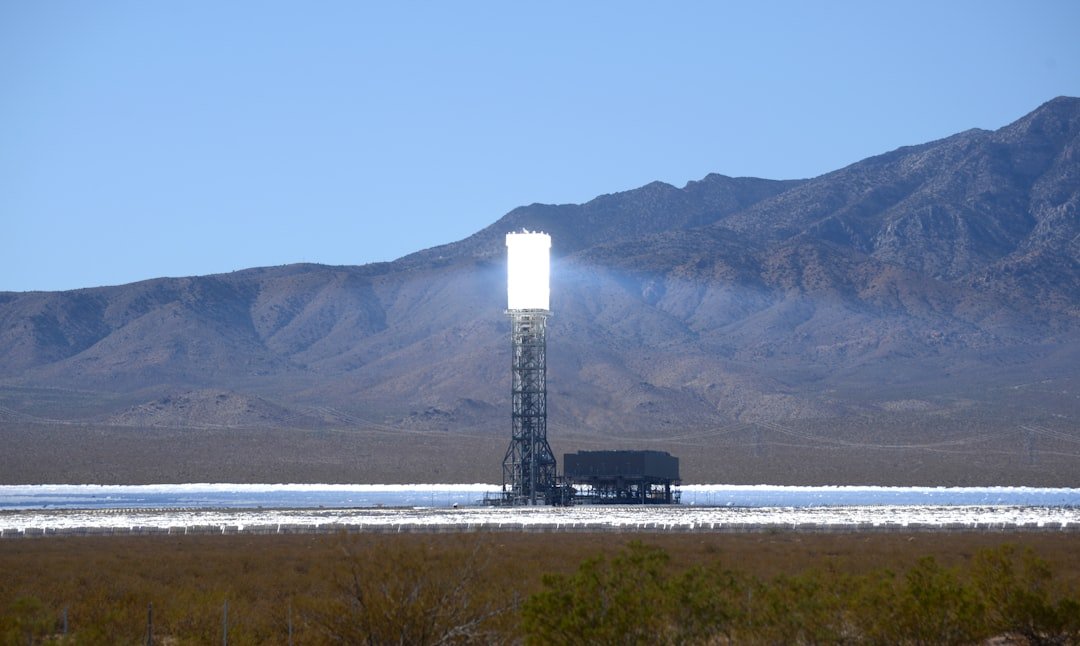
That is where solar thermal sits: less fashionable than PV, less visible to consumers, but important in a different part of the decarbonisation problem. It captures solar energy as heat rather than converting it into electricity. That heat can be used for domestic hot water, district heating, commercial buildings, agriculture, industrial processes and, in concentrated form, power generation or thermal storage.
The renewed interest in the sector is partly visible in market-research forecasts. SNS Insider recently estimated the global solar thermal market at USD 20.68 billion in 2025 and projected it could reach USD 40.67 billion by 2035, implying a compound annual growth rate of 7.02 percent over 2026–2035.
That forecast is useful as a market signal, but it should not be read as a simple story of explosive growth. The more interesting question is why solar thermal remains structurally important even when parts of the market are under pressure.
The Energy Transition Has Underpriced Heat
The electricity transition is easier to see. A solar farm appears on a hillside. A battery project is announced. A grid connection is approved or delayed. The market has metrics, headlines and political theatre.
Heat is more awkward. It is embedded in buildings, factories, food production, chemical processes, laundries, hospitals, hotels and district-heating networks. Much of it is produced quietly by gas boilers, oil systems, coal-fired heat, biomass, electric resistance or industrial steam systems. It is less visible than electricity, but it represents a large part of final energy demand.
Solar thermal’s role is therefore not to compete with solar PV on the same terms. It is to answer a different question: where does it make more sense to produce useful heat directly than to generate electricity first and then convert that electricity back into heat?
In low-temperature applications such as domestic hot water, space heating support or swimming pools, the case can be straightforward. In commercial buildings and district heating, it depends on roof area, land availability, demand profiles, system design and storage. In industry, the economics depend heavily on temperature requirements, operating hours, fossil-fuel prices, carbon costs and whether the site can integrate solar heat without disrupting production.
This is why broad market-size forecasts are never enough. Solar thermal is not one market. It is a family of technologies serving different temperature bands, customer types and infrastructure conditions.
A Large Installed Base, But A Mixed Market
The global solar thermal sector is not new. The IEA Solar Heating and Cooling Programme’s Solar Heat Worldwide 2025 report is described as a comprehensive assessment of solar heating and cooling markets, based on data from 72 countries. The European Commission’s Joint Research Centre reported that solar thermal technologies for heating and cooling reached 544 GWth of installed global capacity by the end of 2024, covering 777 million square metres of collector area.
That scale matters. Solar thermal is not an experimental niche. It already supplies heat across buildings, water-heating systems, district-heating plants and industrial applications.
Yet the current market picture is uneven. REN21’s Global Status Report 2025 noted that the global market for solar thermal water collectors contracted by 14.2 percent in 2024, mainly because of continued decline in China, the largest market. At the same time, demand for large-scale solar thermal heating projects has risen, and 346 large-scale solar thermal district-heating systems were operating globally by the end of 2024, with total capacity of 2 GWth.
That is the tension. Solar thermal has a large installed base and a clear technical purpose, but its growth is not uniform. Small-scale collector markets have weakened in some regions. Large systems, district heating and industrial process heat look more strategically relevant. The market is shifting from household equipment toward more engineered heat infrastructure.
Industrial Heat Is The Harder Prize
The most compelling opportunity is not another rooftop hot-water system. It is industrial process heat.
Many industrial processes require heat below 400°C, especially in food and beverage, textiles, chemicals, pulp and paper, mining, agriculture and some manufacturing applications. IRENA has previously noted that solar thermal systems can supply substantial heat demand in industrial and agricultural food processes, and that in developed economies solar thermal could technically provide about half of industrial heat consumption in the hot water and steam range up to 400°C.
That does not mean the market will automatically scale. Industrial heat projects are hard to sell because they sit inside operating businesses, not consumer energy choices. A factory manager cares about uptime, temperature stability, maintenance burden, payback period, land use and integration risk. A solar thermal provider is not only selling equipment. It is asking the customer to alter part of a production system.
This is where solar thermal differs from power-sector renewables. A company can buy renewable electricity through a power purchase agreement without changing the physical process inside its factory. Replacing or supplementing process heat requires a more intimate understanding of the site.
The opportunity is large precisely because the problem is difficult. Industrial heat remains one of the less glamorous but more important parts of decarbonisation.
Storage Changes The Argument
Solar thermal becomes more valuable when heat can be stored.
Thermal storage is not new, but it is increasingly relevant as industry tries to manage intermittency, fuel-price volatility and grid constraints. In concentrated solar power, molten-salt storage has long been used to extend generation beyond daylight hours. In industrial and district-heating applications, hot water tanks, pit thermal energy storage, phase-change materials and other storage systems can help align solar heat production with demand.
This changes the investment case. Without storage, solar thermal is more dependent on immediate heat demand during sunny hours. With storage, it becomes a dispatchable heat resource, at least within limits.
That matters for district heating in particular. Large solar thermal plants can feed heat networks, especially where municipalities have land, seasonal demand planning and infrastructure capable of absorbing low-carbon heat. It also matters for industrial sites with predictable daily or seasonal heat loads.
But storage is not magic. It adds capital cost, design complexity and space requirements. The stronger projects are likely to be those where solar resource, land, heat demand and storage economics fit together. Poorly integrated systems will not be rescued by the word “thermal”.
IoT Helps, But It Is Not The Main Story
The original market note emphasised Industrial IoT as a major driver. That is partly right, but the claim needs discipline.
Sensors, analytics and control systems can improve solar thermal operations. They can monitor collector performance, detect faults, optimise pumps and heat exchangers, support predictive maintenance and help operators compare expected output with actual output. In large installations, better monitoring can matter materially because underperformance may otherwise go unnoticed for months.
But IoT does not create the market by itself. It improves system performance and bankability. The underlying case still depends on heat demand, fuel substitution, policy incentives, carbon economics and integration quality.
This distinction is important because clean-energy markets often overuse digital language. Adding sensors to a weak project does not make it commercially strong. Adding good controls to a well-designed system can improve reliability, reduce maintenance costs and make the performance case easier to verify.
For investors and industrial customers, the useful question is not whether a system is “IoT-enabled”. It is whether the data changes operational outcomes: fewer failures, better yield, lower fuel use, clearer performance guarantees and stronger measurement for emissions reporting.
Asia Matters, But China Cuts Both Ways
Asia-Pacific is often presented as the natural growth engine for solar thermal. That is broadly plausible because the region combines large heat demand, manufacturing capacity, urbanisation, industrial activity and strong solar resources in many markets.
But the regional story is not simple. China has historically dominated global solar thermal deployment, particularly in water-heating systems. When China slows, the global market shows it. REN21 explicitly linked the 2024 contraction in solar thermal water collectors mainly to ongoing decline in China.
At the same time, China is important in concentrated solar power and large renewable-energy infrastructure. The SNS Insider forecast points to concentrated solar power projects in China’s Gansu and Xinjiang provinces as part of the growth story.
That duality matters. China can be both a drag on one segment and a driver in another. A mature rooftop water-heating market can decline while industrial heat, district heating or CSP projects expand. Investors should therefore be careful with regional claims. “Asia-Pacific growth” may mean very different things depending on whether the discussion is residential collectors, industrial heat systems, district heating or concentrated solar power.
Europe’s Opportunity Is Heat Networks And Industry
Europe’s solar thermal case is more closely tied to gas dependence, industrial decarbonisation, district heating and building efficiency.
Solar Heat Europe’s Solar Thermal Market Outlook 2024/2025, published in October 2025, aims to capture the latest figures for the European solar thermal market and provide a full picture for industry, policymakers, investors and energy professionals. The JRC reported that the EU accounted for 7.5 percent of global solar thermal capacity at the end of 2024, with more than 3,000 MWth of manufacturing capacity.
Europe has several reasons to care. The first is energy security. Reducing gas demand for heating is politically and economically valuable. The second is industrial competitiveness. Companies facing carbon costs and customer pressure need practical heat-decarbonisation options. The third is infrastructure. District heating creates an entry point for large-scale solar thermal where individual building installations may be too fragmented.
The challenge is that Europe also has competing solutions: heat pumps, geothermal heat, waste heat recovery, biomass, electrification, hydrogen in limited cases, and efficiency upgrades. Solar thermal will not win every heat application. Its role is strongest where it can provide low-cost useful heat, integrate with storage or networks, and reduce fossil-fuel consumption without increasing operational complexity.
The Competitive Question: Why Not Electrify?
Any serious discussion of solar thermal must address the obvious competitor: electrification.
Solar PV plus heat pumps is a powerful combination for buildings and some low-temperature heat. It benefits from rapidly scaling PV supply chains and the broader electrification push. In many cases, electrification will be the preferred route.
Solar thermal’s answer is not to deny that. It is to focus on situations where direct heat has advantages: high thermal efficiency, reduced pressure on electrical grids, compatibility with existing hot-water or steam systems, storage in thermal rather than electrical form, and industrial sites where heat demand is steady and local solar resource is strong.
The wrong framing is “solar thermal versus solar PV”. The better framing is system design. Some sites will use PV. Some will use solar thermal. Some will use both. Some will combine solar thermal with heat pumps, boilers, storage or waste heat.
The energy transition will not be won by one technology taking every application. It will be won by matching technologies to loads.
What Would Make The Forecast Credible?
A market growing from roughly USD 20.68 billion in 2025 to USD 40.67 billion by 2035 is possible, but it requires more than general enthusiasm for clean energy.
Several conditions would need to hold.
Industrial customers would need stronger incentives to replace fossil heat, whether through carbon pricing, subsidies, tax credits, procurement pressure or fuel-price volatility. District-heating operators would need to invest in large solar thermal fields and storage. Building owners would need reasons to choose solar hot-water systems where heat pumps or PV might otherwise dominate. Technology providers would need to reduce installation complexity and improve performance guarantees. Banks and infrastructure investors would need standardised project models that make solar heat easier to finance.
Above all, the sector needs better project evidence. Solar thermal is often technically credible but commercially underexplained. Buyers need case studies that show fuel savings, uptime, maintenance costs, land requirements, payback periods and emissions reductions under real operating conditions.
That is where data and monitoring can help. Not as a fashionable IoT narrative, but as proof that systems perform.
The Market Is Not As Simple As The Headline
The solar thermal market’s future is not a clean, straight line from USD 20 billion to USD 40 billion. It is a more complicated sorting process.
Small-scale residential water heating may continue to face pressure in some countries. Large-scale district heating may grow where policy, land and heat networks align. Industrial process heat may become more important, but adoption will be slower and more site-specific than optimistic forecasts suggest. Concentrated solar power may remain relevant in certain high-irradiance regions, especially where storage improves dispatchability. Digital controls will improve performance, but they will not remove the need for good engineering.
That does not weaken the case for solar thermal. It makes the case more serious.
The world does not only need cleaner electricity. It needs cleaner heat. Solar thermal has always been a practical technology for that problem, but it has often lacked the visibility, financing structures and political attention given to solar PV.
The next decade will test whether that changes. If industry, district heating and storage become the centre of the story, solar thermal could move from the margins of the solar conversation into a more useful role: not as the glamorous face of renewable energy, but as one of the technologies that helps remove fossil fuels from the parts of the economy that still run on heat.