
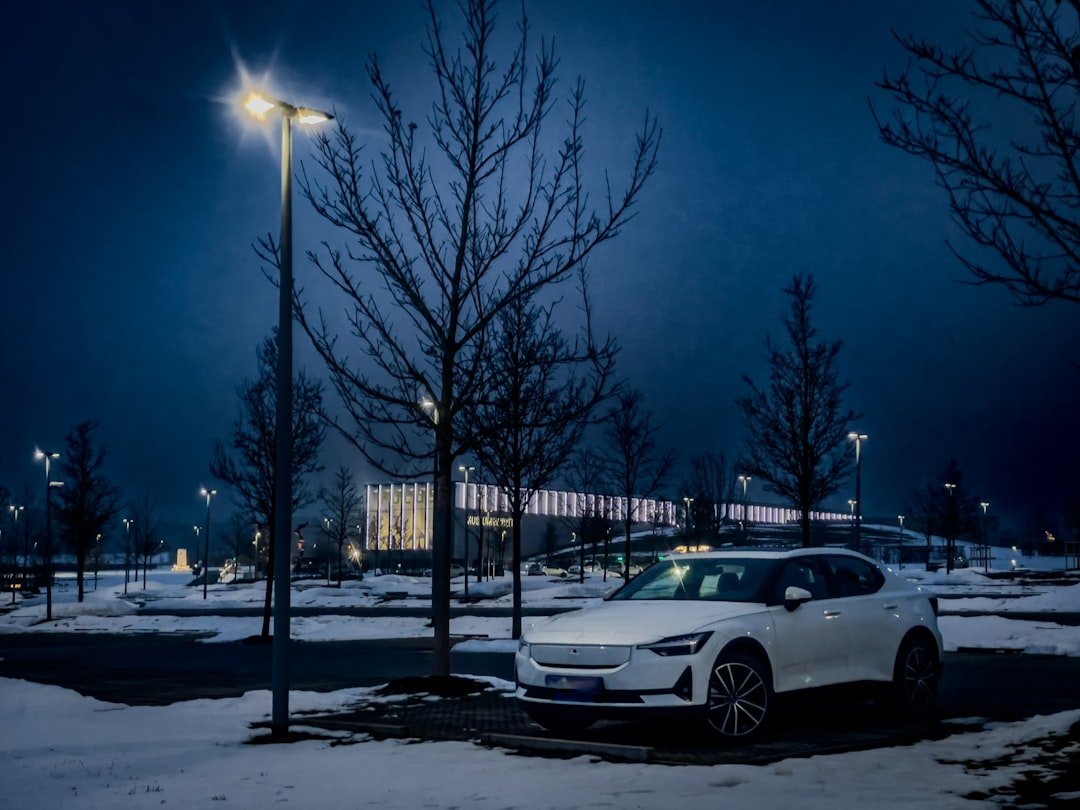
Streetlights Could Become The Next EV Charging Network
Electric-vehicle charging usually arrives in cities as dedicated infrastructure. Operators install chargers in car parks, service stations and purpose-built bays, while local authorities search for enough pavement or kerb space to accommodate equipment that did not exist when most neighbourhoods were designed. Streetlights offer a different route because electricity already reaches thousands of locations precisely where many drivers leave cars overnight.
The idea works particularly well in dense residential districts where people park on the street rather than in private driveways. Home charging remains the cheapest and most convenient option for many EV owners, yet that advantage disappears for residents of apartment buildings and terraced streets whose vehicles sit several metres from the nearest private electrical connection.
Installing a conventional charging post for every few parking spaces can add street clutter and require new foundations, cabling and planning approval. A lamp column already occupies the pavement and already belongs to the municipal infrastructure estate, which allows cities to add charging capability without introducing a completely new piece of street furniture at every location.
The electrical challenge determines where the model works. Older lighting networks were designed to power efficient lamps rather than vehicles, and a column cannot simply supply whatever charging rate a driver wants because several units may share limited circuits. Authorities therefore need to understand available capacity before treating every streetlight as a future charger.
Slow overnight charging fits those constraints better than rapid charging. A car parked for ten hours rarely needs to receive its entire battery capacity within the first hour, which allows relatively modest chargers to replace the energy used during ordinary daily driving before the owner leaves again in the morning.
Smart charging can distribute demand further by delaying or reducing power when several vehicles connect simultaneously. Drivers care primarily that the battery reaches the required level before departure, giving operators a long period during which software can schedule electricity around local network capacity.
That flexibility becomes valuable as residential electrification expands beyond cars. Heat pumps, electric cooking and household consumption already increase evening demand, which means charging infrastructure that ignores the wider distribution network can force expensive upgrades even when individual devices appear relatively modest.
Pricing can encourage drivers to cooperate. A cheaper overnight tariff rewards users who allow the system to decide exactly when their vehicles charge, while someone who needs power immediately can pay more for priority where the network supports it.
Lamp-post chargers could also improve the economics of neighbourhood deployment because cities can expand incrementally. Instead of building one large charging hub and asking residents to walk several blocks, operators can add capacity on streets where EV adoption produces sufficient demand.
Availability still needs management because a charger provides little benefit when a petrol car occupies the adjoining space every evening. Local authorities may reserve some bays for charging, although converting too much general parking before utilisation rises can create resentment and leave valuable kerb space underused.
Digital reservation systems offer another possibility, but reserving ordinary residential spaces too aggressively would replace one inconvenience with another. Cities need enough predictability for EV drivers without turning every charger into a privately booked parking bay unavailable to the rest of the neighbourhood.
Accessibility deserves attention during installation because cables can become obstacles when the charger and vehicle sit on opposite sides of a pedestrian route. Designs need to prevent charging leads from crossing pavements where wheelchair users, pushchairs and visually impaired pedestrians depend on an unobstructed path.
Maintenance also changes once streetlights perform two functions. A broken lamp inconveniences the street; a broken lamp that also supplies several households’ primary charging point affects transport as well. Operators need remote diagnostics and repair processes that reflect the higher importance of the combined asset.
Ownership can complicate responsibility because lighting systems, electricity networks, parking enforcement and charging services may belong to different organisations. Successful deployment requires contracts that establish who installs the hardware, sells the electricity, repairs failures and upgrades connections when demand grows.
Cities should also resist assuming that one form of charging infrastructure can serve every driver. Rapid hubs remain useful for long journeys and people who need energy quickly, workplace charging fits vehicles parked throughout the day and private home chargers remain attractive wherever properties allow them.
Lamp columns address a narrower gap: residential streets where vehicles already sit idle overnight and the driver cannot reach a private socket. That gap becomes increasingly important as EV ownership expands beyond households with garages and driveways.
The broader planning lesson concerns infrastructure reuse. Smart-city projects often begin by adding another device to streets that already contain an extraordinary amount of physical equipment. Electrification creates stronger pressure to ask whether existing assets can perform several functions before municipalities construct parallel networks beside them.
Streetlights have spent more than a century supplying one relatively simple public service after dark. In an electric city, some of them may also become the connection between parked vehicles and the power network, allowing infrastructure already distributed through every neighbourhood to acquire an entirely new purpose.